
Retiring in Idaho sounds pretty great on paper. Idaho ranked number five in the country for retirement, and honestly, that is damn good. The state earns a lot of that praise with low crime, a strong sense of community, beautiful scenery, and some legitimately helpful tax advantages.
But top five is not the same thing as best for everyone. That distinction matters. Retiring in Idaho can be incredible if the lifestyle, budget, health care plan, and climate realities line up with what we actually need. It can also be frustrating if we arrive expecting cheap homes, easy transportation, pristine air all year, and simple access to long-term care.
Rankings are averages on a spreadsheet. Retirement is personal. Our health, family, income sources, tolerance for winter, and ability to drive all matter more than a shiny number beside Idaho’s name.
Why Idaho Ranks So Well for Retirement
Retiring in Idaho appeals to people for good reasons. The quality of life is real. We have mountains, lakes, small-town connection, outdoor access, dry air, and a pace that often feels less chaotic than a big coastal metro. Idaho also performs exceptionally well in the categories retirees tend to care about: safety, community, and taxes.
The important thing is to see the ranking as a starting point, not a finish line. If safety is our number one concern, Idaho deserves serious consideration. If we need robust transit, dense walkability, or deep home health care options, the picture changes fast.
Taxes for Retirees: Good News, With a Catch
One major advantage of retiring in Idaho is that Idaho does not tax Social Security income. Period. If Social Security makes up a large share of our retirement income, that can mean meaningful money staying in our pocket.
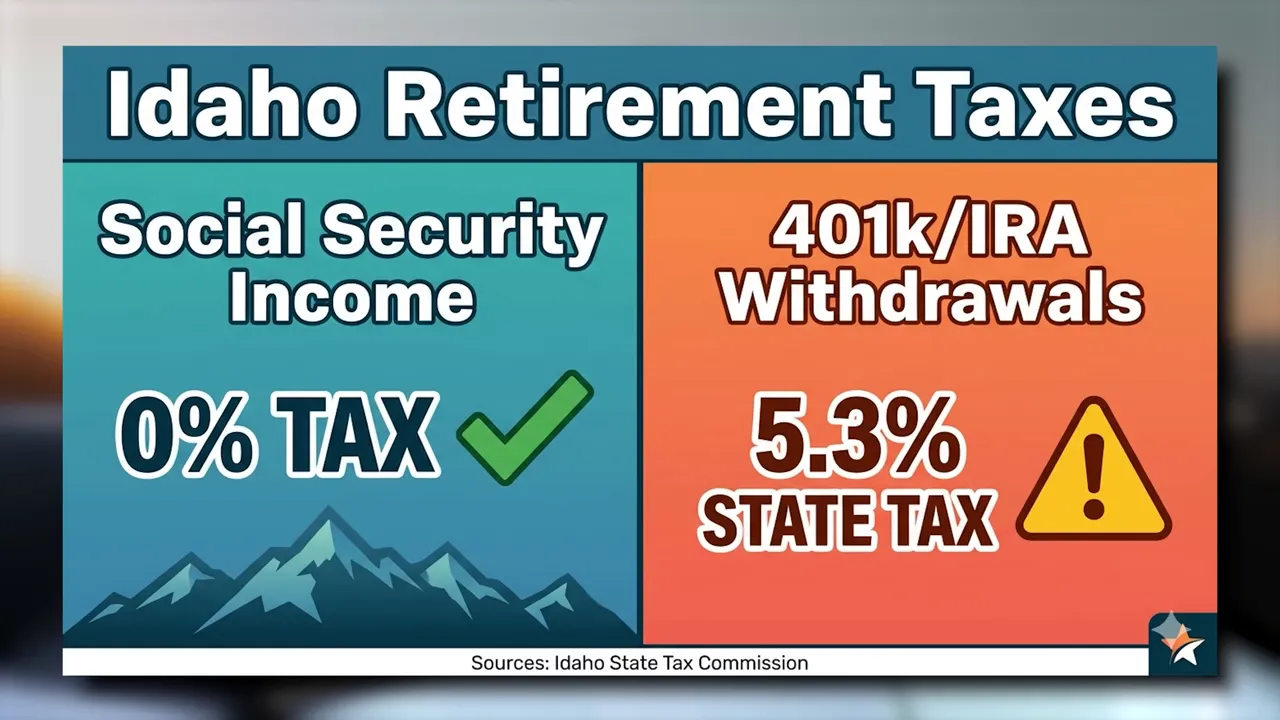
Now for the part that gets left off the cheerful brochure. Withdrawals from 401(k)s and IRAs are subject to Idaho’s 5.3% state income tax rate. So, the tax picture depends heavily on where our income actually comes from.
- Mostly Social Security income: Idaho’s tax treatment can look very favorable.
- Large 401(k) or IRA withdrawals: The state tax will be part of the monthly math.
- A mixed income strategy: We need to calculate the details instead of assuming “retirement-friendly” means tax-free.
It is a little like ordering a salad and finding out the dressing costs extra. We are still getting the salad, but now we are annoyed about it. We should probably have ordered the steak.
Idaho’s Circuit Breaker Property Tax Reduction Program
Eligible homeowners age 65 and older may qualify for Idaho’s property tax reduction program, commonly called the circuit breaker program. It can reduce property taxes by roughly $250 to $1,500 on eligible homes.
The name is kind of perfect. A circuit breaker helps prevent a financial shock from property taxes, and yes, somebody in government probably felt very clever when they named it. Still, jokes aside, this is worth checking into if we are retiring in Idaho and planning to own a home.
Safety and Community Are Idaho’s Strongest Cards
Idaho ranks first nationally for the lowest property crime rate. That is not a small thing. Feeling safe at home, at the coffee shop, on a walk, or while leaving a bike outside matters a lot when deciding where to spend retirement.
We are not saying nobody locks anything here. Please lock your stuff. But Idaho’s low property crime rate is a real, tangible lifestyle benefit.
Community is another reason retiring in Idaho works for many people. Idaho ranks as the second happiest state for seniors, and only 27% of seniors live alone, the second-lowest rate in the country. People often arrive to be closer to family, or they build connections once they get here through senior centers, potlucks, activity groups, church communities, quilting circles, and regular neighbor interaction.
It can feel a little like a Hallmark movie, except people really do borrow sugar from neighbors and have serious opinions about whether Costco or WinCo has better bulk pricing. For the record, Costco sells everything from baby formula to coffins, so it is hard to argue against the range.
Health Care and Long-Term Care: The Biggest Reality Check
This is the part retirement rankings often fail to capture. Health care quality and health care capacity are not the same thing.
Idaho ranks 19th overall for health care in the Commonwealth Fund ranking. That is middle of the pack, and we can find doctors in places such as Boise and Coeur d’Alene. The issue becomes more serious when our needs change with age.
A healthy 65-year-old may have a very different experience from an 80-year-old who needs regular help bathing, managing medications, or remaining safely at home. Anyone considering retiring in Idaho needs a genuine plan for that later stage, not just a plan for the first few healthy years.
Idaho’s Home Health Care Worker Shortage
Idaho is facing a major home health care worker shortage. The financial gap behind it is brutally simple: Medicaid reimbursement pays home care agencies about $24.44 an hour, while the actual cost to provide that care is about $32.69 an hour.
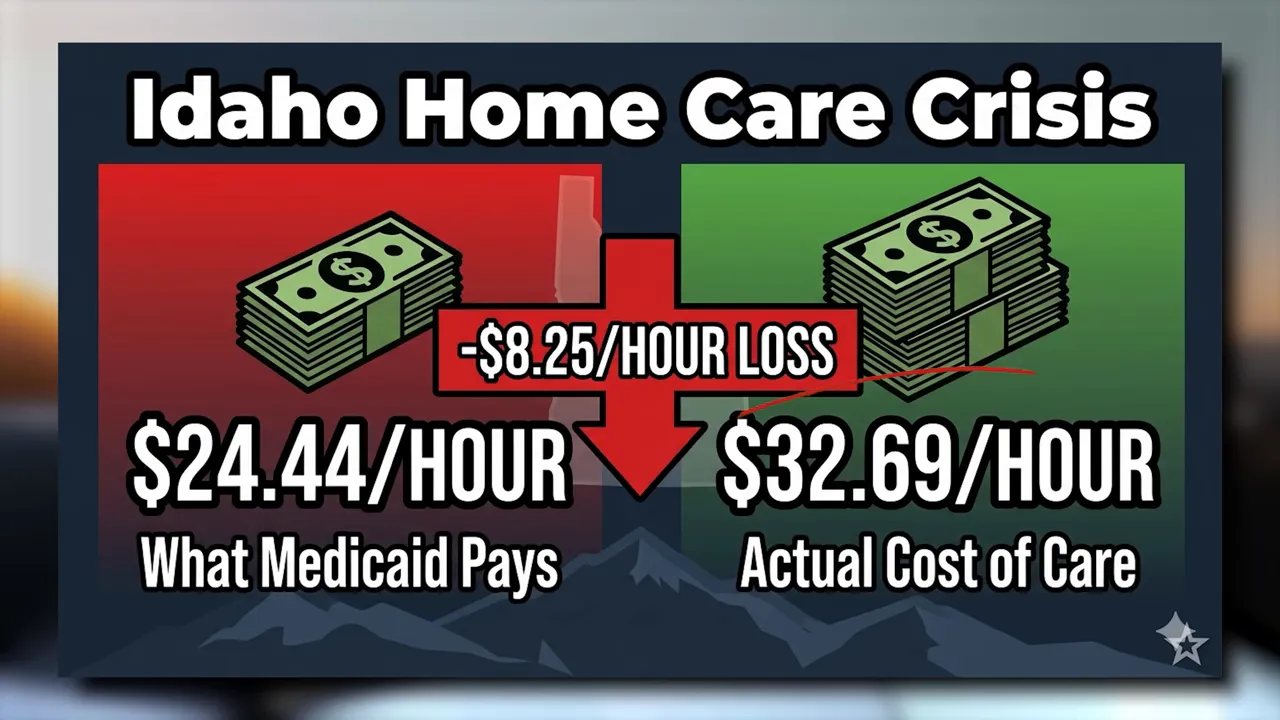
That is an $8.25-per-hour loss. If we were running a lemonade stand and it cost a dollar to make every cup while somebody paid us 75 cents, we would not keep making lemonade for long. Home care agencies face that same basic problem. More than 80% report difficulty recruiting caregivers, and some agencies have closed.
For those hoping to age in place, this deserves serious attention. We may need family nearby, private resources, long-term care insurance, or a backup plan for assisted living. Hoping that care will be easy to arrange later is not really a plan.
The Cost of Nursing Homes and Assisted Living
Long-term care is expensive anywhere, but the numbers in Idaho need to be part of the retirement budget. As of 2025, the median cost of a private nursing home room in Idaho is about $146,000 per year, a 14% increase from the previous year. Assisted living is roughly $59,468 annually.
That does not mean retiring in Idaho is a bad decision. It means we need to budget for the possibility of needing care, talk honestly with family, and understand the local options before purchasing a home.
Wildfire Smoke Is Not a Minor Footnote
If we have asthma, COPD, a history of smoking, or any respiratory concern, wildfire smoke should be part of the decision to retire here. Boise ranked as the 36th most polluted metro area in the nation for short-term particle pollution, driven largely by wildfire smoke.
That does not mean Idaho has factory-smog air every day. Far from it. Most of the year, the air is gorgeous. The problem is that fire season can turn the sky orange, obscure mountain views, and force us to close windows and run air purifiers. In 2025, smoke affected central and northern Idaho for weeks late in the summer.
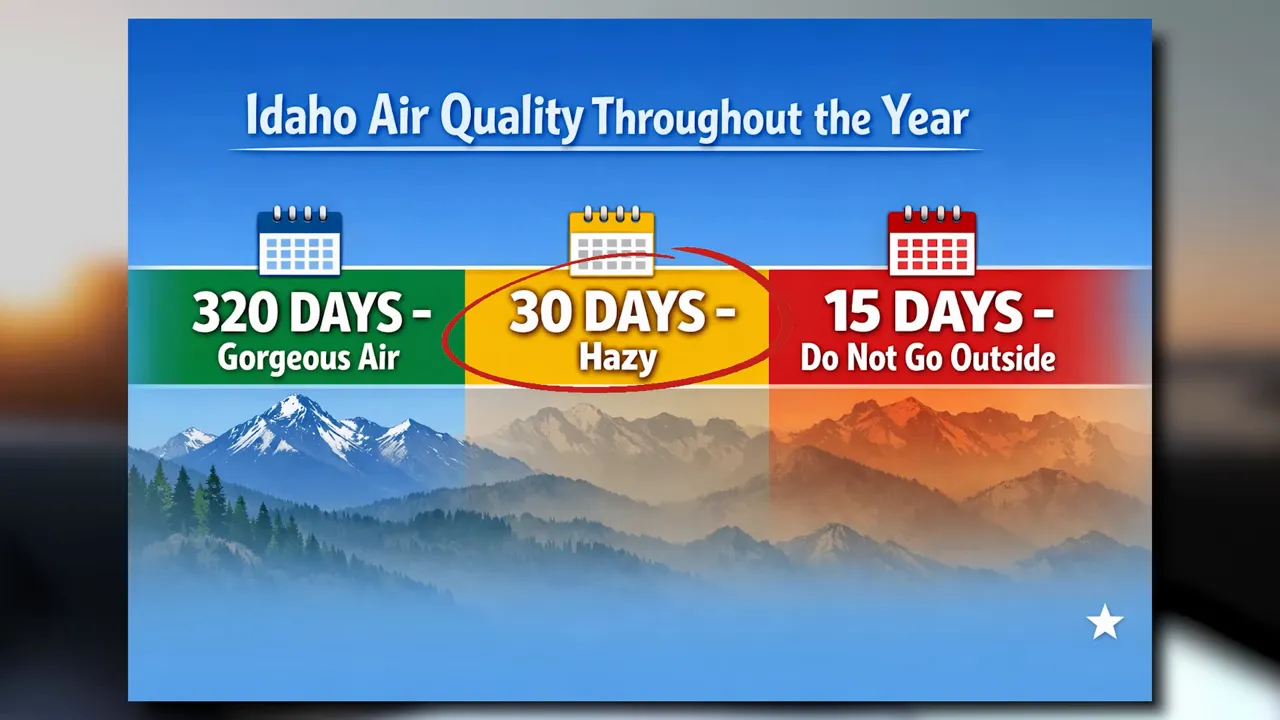
A realistic way to think about it is roughly 320 days of excellent air, 30 hazy days, and perhaps 15 days when outdoor activity is a bad idea. Some years are better than others. But large western wildfires are becoming more frequent, so we should treat smoke as a recurring risk rather than one freak bad summer.
For some people, two smoky weeks means extra time inside with Netflix and cribbage. For others who moved for hiking and daily outdoor life, it is their personal hell. Both reactions are valid. We just need to know which camp we are in before retiring in Idaho.
Housing Costs and Car Dependency
The old “Idaho is cheap” story is outdated. Idaho can still feel affordable compared with the Bay Area or Seattle, but it is not 2015 Idaho anymore. Those days are buried alongside Blockbuster and reasonably priced concert tickets.
Average home prices sit around $492,000 in Boise and $578,000 in Coeur d’Alene. For someone arriving from a high-cost coastal market, those numbers may feel like a bargain. For someone coming from the Midwest or South, they may feel like a surprise.
Housing is only one side of the affordability equation. The other is transportation. Outside specific pockets such as downtown Boise or downtown Coeur d’Alene, Idaho is highly car dependent. Boise has an overall walk score of 35, which is firmly in car-required territory.
We will likely need a vehicle for groceries, doctor appointments, prescriptions, social plans, and daily errands. Public transit exists through Valley Regional Transit, but it is limited. This matters enormously when retiring in Idaho, especially if we are already wondering what life looks like when driving becomes harder.
Buying in Eagle, Meridian, Post Falls, or Hayden without thinking through future transportation can leave us stranded later. Beautiful views are great. Beautiful views with no practical way to get groceries are a different deal entirely.
Who Is Retiring in Idaho Actually Right For?
Idaho is not universally the best retirement state because no state is. It can be top tier for the right person. Retiring in Idaho may be an excellent fit if most of these points are true for us:
- We value safety and low crime highly.
- We are comfortable with cold winters and understand that smoky summers can happen.
- We have a strong health care and long-term care plan.
- We have family nearby, significant resources, or both.
- We love the outdoors but are realistic about fire season.
- We are comfortable driving for everyday needs.
- Our retirement income leans more on Social Security than large 401(k) or IRA withdrawals.
If that list fits, Idaho can make us really happy. The beauty is absurdly real. The sense of community is real. The ranking is earned. We just should not confuse “top five” with “perfect for every human who owns hiking boots.”
Try Before You Buy: Test Both Seasons
The smartest move for anyone considering retiring in Idaho is a trial run. Idaho has standardized short-term rental regulations, making it easier to spend meaningful time here before committing to a purchase.
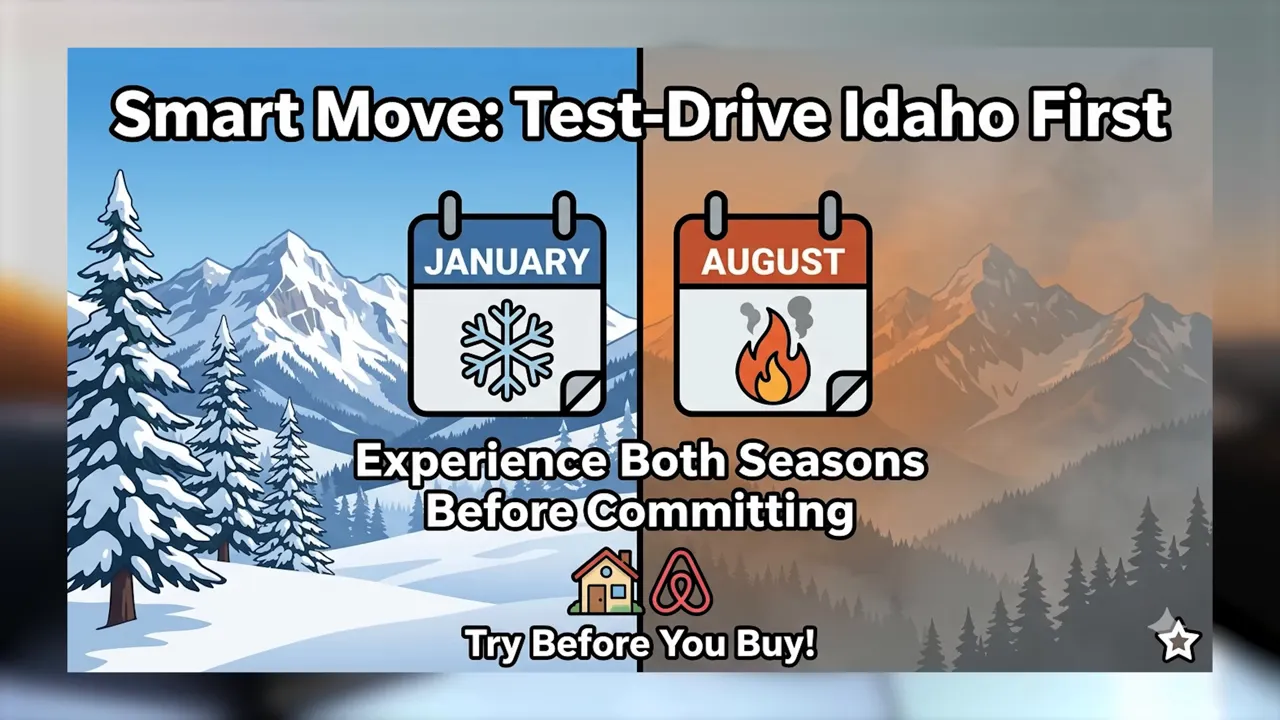
Do not visit only during a perfect July weekend and decide you have found paradise. Rent a place in January to experience winter. Then return in late August or early September to experience potential fire-season smoke. Buy groceries. Drive to medical appointments. Explore neighborhoods. Sit in traffic. Check how far everyday errands actually are.
We need to live the routine, not just admire the scenery. Retirement is not like buying a couch online. If it does not fit the living room, we cannot just send it back.
Frequently Asked Questions
Is Idaho a good place to retire?
Yes, retiring in Idaho can be a great choice for people who value safety, community, outdoor access, and Social Security tax savings. It is less ideal for those who need extensive public transit, guaranteed clean summer air, or easy access to a deep home health care workforce.
Does Idaho tax Social Security benefits?
No. Idaho does not tax Social Security income. However, withdrawals from 401(k)s and IRAs are taxed at the state income tax rate of 5.3%.
What are the biggest downsides of retiring in Idaho?
The biggest considerations are home health care capacity, high long-term care costs, wildfire smoke during some summers, rising home prices, cold winters, and the need to drive in most communities.
Is Boise walkable for retirees?
Specific downtown areas are more walkable, but Boise’s overall walk score is 35. Most residents will need a vehicle for regular errands, appointments, prescriptions, and groceries.
Should we rent before retiring in Idaho?
Absolutely. A January stay helps us understand winter, while a late-August or early-September stay reveals what fire season can feel like. That is far more useful than making a major decision from a short vacation.
Retiring in Idaho can be fantastic, but it works best when we go in with our eyes open and maybe a little sense of humor. Idaho has earned its top-five ranking. Safety, community, and natural beauty are not marketing fluff here.
Still, the right retirement destination is not determined by a spreadsheet. It is determined by our health, budget, family support, income, daily transportation needs, and how we feel when the sky turns smoky for two weeks. Do the work, test both seasons, and make sure Idaho fits the retirement we actually want to live.
If you want help figuring out whether retiring in Idaho actually fits your situation (taxes, health care, wildfire risk, and realistic housing), reach out to us - Call/text (208) 907-5757.