
Living in Priest River, Idaho is not about having everything five minutes away. It is about rivers, forest, acreage, real winters, and a town where solitude is not a problem to solve. It is the point.
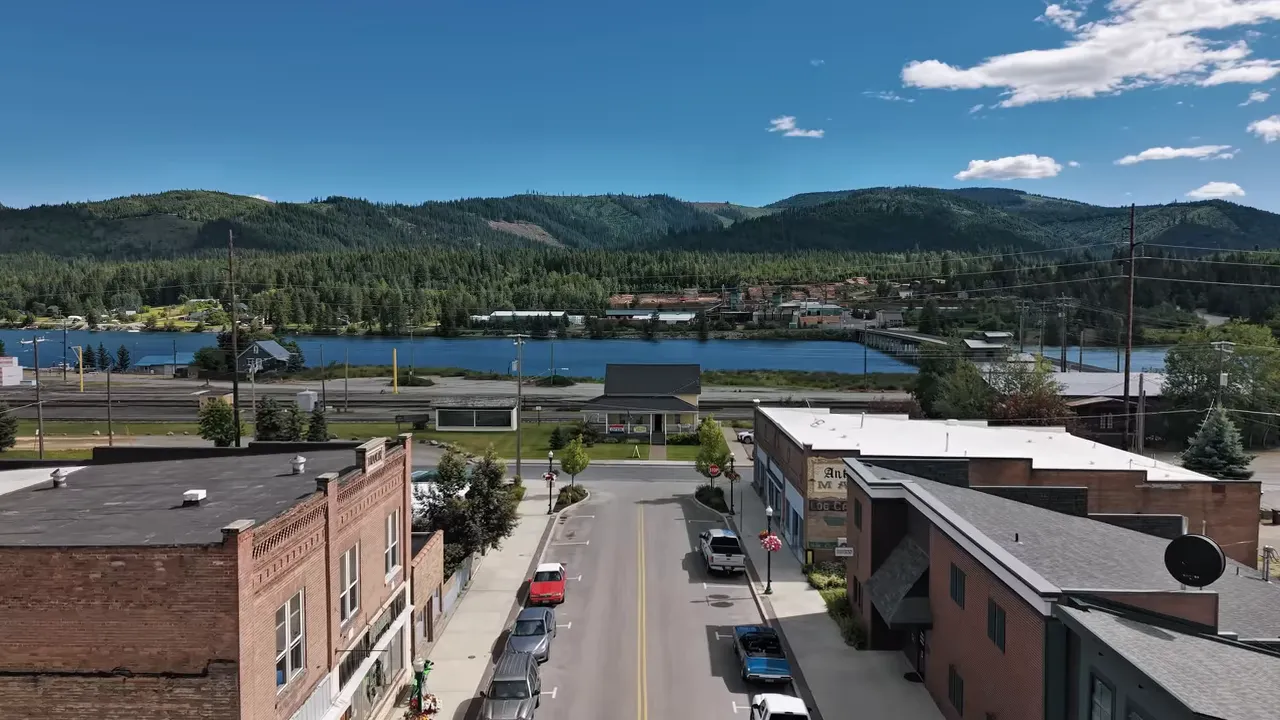
With roughly 1,800 people, Priest River feels like St. Maries ’ friendlier cousin who headed farther north, got serious about off-grid living, and decided the fewer people around, the better. The downtown is small enough to walk slowly in a few minutes, but it has more charm than a town this size has any business having.
If you are moving to Idaho because you want water, mountains, elbow room, and less HOA nonsense, Priest River deserves a real look. But do not confuse quiet with easy. This is a place with real trade-offs, from snow removal and rural internet to healthcare drives and limited local jobs.
Where Is Priest River Idaho
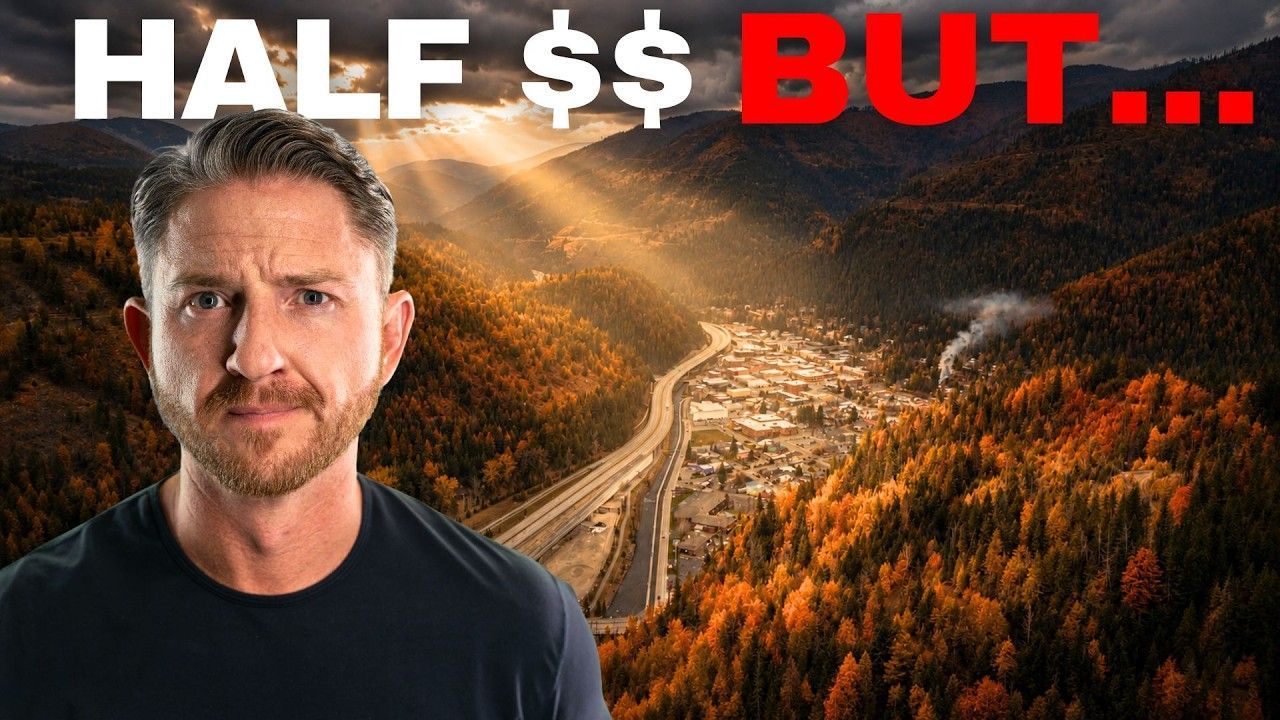
Priest River sits in the Idaho Panhandle where the Priest River meets the Pend Oreille River. It is right along Highway 2, at roughly 2,100 feet in elevation, with Idaho Panhandle National Forest surrounding it on all sides.
This is a genuinely remote North Idaho location, but it is not completely disconnected. From town, the approximate drive times are:
- Sandpoint: 30 minutes east
- Coeur d’Alene: about one hour south
- Spokane International Airport: around 75 minutes
- Priest Lake: about 30 minutes north
That means living in Priest River, Idaho comes with a little planning. Major shopping, specialized appointments, and flights are not spontaneous errands. Your delivery driver has probably earned a medal by the time they reach some of these properties.
But the remoteness is not a bug here. It is the feature. You are close to forest, rivers, mountains, and one of Idaho’s most beautiful lakes without battling the density and competition that come with the bigger North Idaho names.
Small Town Life In Priest River
For a town of around 1,800 people, downtown Priest River is surprisingly good. It is not big, and nobody is pretending it is. But it has local shops, cafes, diners, a public library, a brewery, and a timber museum dedicated to the region’s logging history.
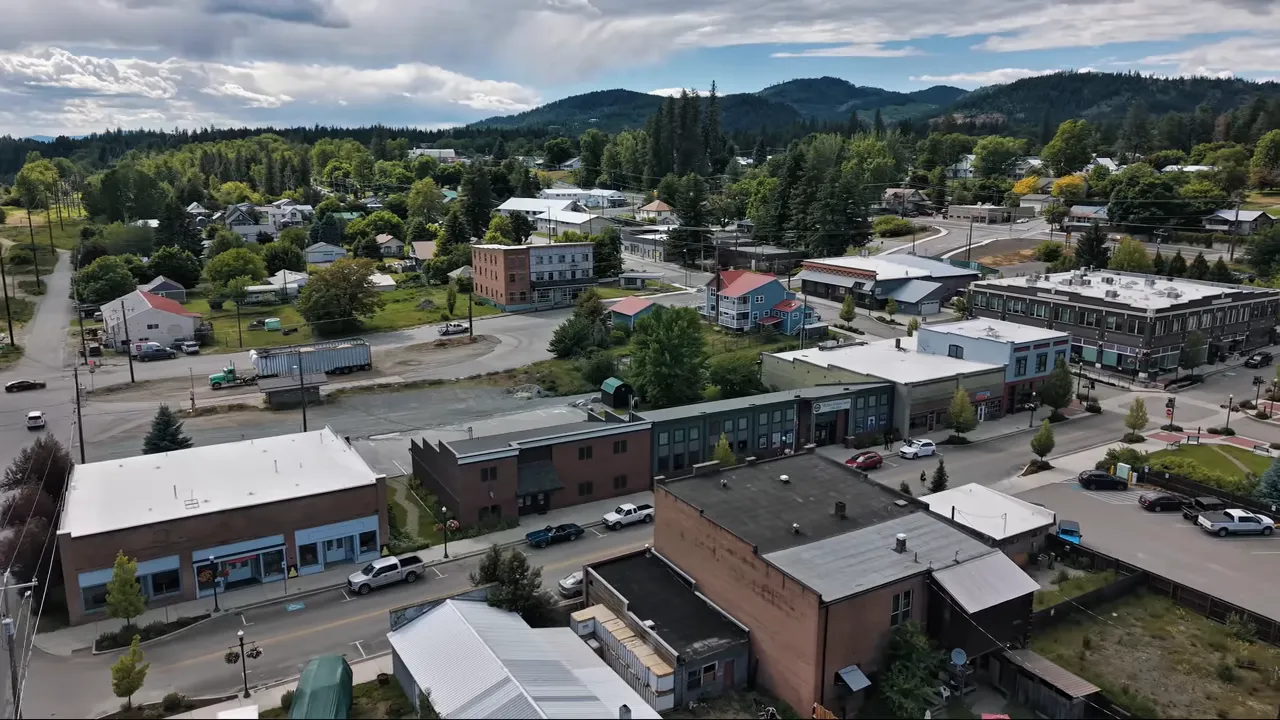
There is something refreshing about a downtown that still feels like it belongs to the people who live there. You can grab a meal, stop into a local business, and fairly quickly become a familiar face. The vibe is small town Idaho without needing three generations of history before somebody gives you a wave at the gas station.
Places and community features that give the town its personality include:
- Timber Town Beer Company, including live music
- The Priest River Library, which serves as a legitimate community gathering point
- Local cafes and diners where regulars are actually remembered
- The Timber Museum, because this is logging country and the history is part of the place
The event calendar is another reason living in Priest River, Idaho can feel more connected than the population count suggests. Timber Days in July celebrates the town’s logging heritage. There is Blues Fest in September, Oktoberfest in October, and Christmas on Main during the holiday season.
It is not a nightlife town. It is not trying to be. It is a town where community events still matter and people tend to look out for their own.
Housing And Cost Of Living In Priest River
The median home price in Priest River is around $415,000. That number may not sound cheap in a vacuum, because it is not 2008 anymore and nothing is cheap like it used to be. Context matters, though.
For that price, you are buying into a small river town near Priest Lake, surrounded by national forest, with a much better chance of getting space than you would find closer to Coeur d’Alene or Sandpoint. Coeur d’Alene is near $600,000 for a median home, and Sandpoint can push past that. In Priest River, you may get the mountains, water access nearby, and room to breathe for less.
The local inventory can range widely:
- Bare land around $200,000
- A mix of in-town homes, rural houses, and acreage properties
- Larger luxury properties, including a 4,500 square foot home on Morningstar Mountain Road listed around $1.35 million
Renters may find a meaningful difference, too. A typical two-bedroom rental averages about $970 per month, compared with a national average near $1,430. That is close to $500 in monthly savings. Please do not spend the entire difference on Costco hot dogs every weekday. Your body deserves better.
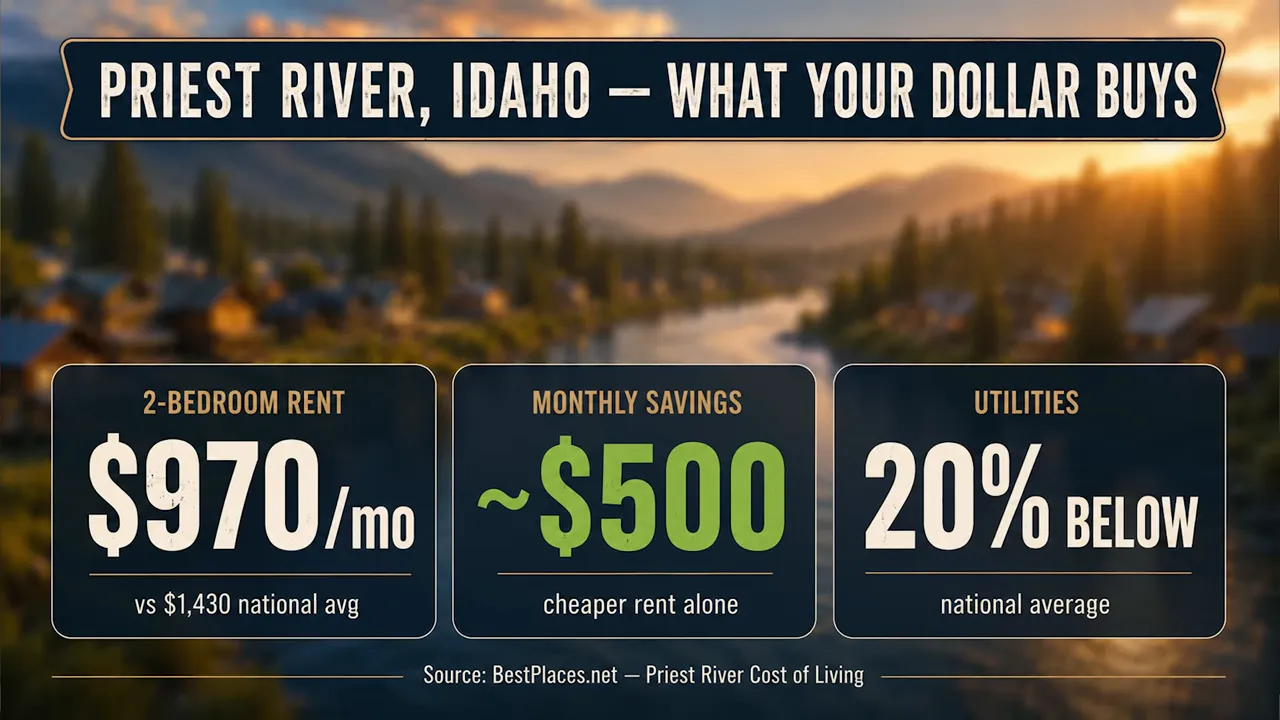
Utilities run roughly 20% below the national average, while groceries are generally in line with the rest of North Idaho. Overall, the cost of living is estimated around 7% above the national average, largely because housing values have appreciated over the past few years.
What Does The Housing Stock Look Like?
Living in Priest River, Idaho means understanding that much of the housing is not brand new. About 65% of the housing stock is single-family homes, about 14% is mobile homes, and the median home was built in 1973.
That is not necessarily bad. It just means a lot of homes have classic bones and may need classic-house work. Think less shiny new subdivision and more Led Zeppelin album: timeless, but possibly in need of a little maintenance.
Jobs And Income When Living In Priest River Idaho
This is the part where the dreamy acreage listing needs to meet reality. Cheap or relatively affordable housing does not matter much if there is no way to support yourself.
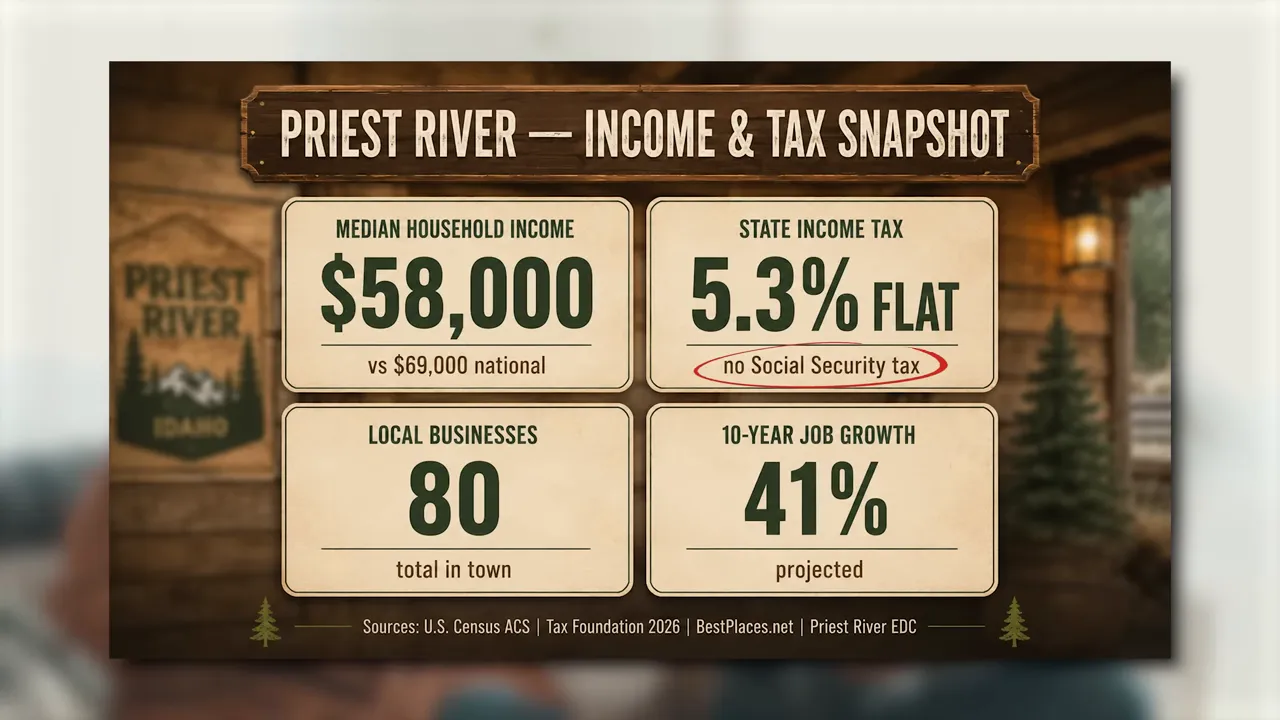
The median household income in Priest River is about $58,000 per year, compared with a national average around $69,000. The local economy is built around timber, tourism, retail, healthcare, and education.
There are about 80 businesses in town. Eighty. That is the whole number. So while projected 10-year job growth is around 41%, it is important to remember that a big percentage increase can still mean going from almost nothing to slightly more than almost nothing.
Living in Priest River, Idaho tends to work best financially for three groups:
- Retirees. Idaho does not tax Social Security, and the state income tax is a flat 5.3%. A fixed income can stretch further here than it can in many parts of the country.
- Remote workers. A city paycheck paired with rural North Idaho acreage can be a serious cheat code.
- Self-reliant locals and entrepreneurs. Timber work, trades, tourism, services, and yes, even monetizing a serious wood-chopping operation can fit the area.
Verify Internet Before Buying Rural Property
If your plan for moving to Idaho depends on remote work, verify the internet at the exact property before closing. Do not trust the listing. Do not trust a vague “high-speed internet available” comment. Verify it.
Rural connectivity can be inconsistent. Starlink is a common choice, but it requires a clear line of sight to the sky. Tall pine trees are beautiful right until they are sitting directly between your dish and the signal. Check the property, the tree cover, and the equipment setup before committing to a 30-year mortgage.
Property Freedom And Off Grid Living
This is where living in Priest River, Idaho gets very interesting for the right person. It may be one of the most property-freedom-friendly places in North Idaho.
Within the city’s R5 rural development zone, there are five-acre minimums, and agriculture and large animals are allowed outright. Chickens, goats, horses, and the whole homestead setup are very much part of the equation.
Outside city limits, Bonner County zoning takes over and the freedom can expand further. Many rural parcels have no CC&Rs, no HOA, and no architectural review board hovering over your mailbox color. Well and septic systems are common, which also means you are responsible for your own infrastructure.
For off-grid buyers, homesteaders, preppers, and people who want to be left alone on their own land, this is a major part of the appeal. You can build the shop, keep the animals, grow the food, and create a life that does not need to fit somebody else’s subdivision rules.
That freedom does come with responsibility. Rural ownership means planning for water, septic, snow removal, access, heating, wildfire preparedness, and communications. There is no property manager coming to rescue you when something fails in the middle of winter.
Weather And Winter In Priest River
There is no polite way to say this: winters in Priest River are real. You cannot move here in October, see two snowflakes, and act surprised that North Idaho does North Idaho things.
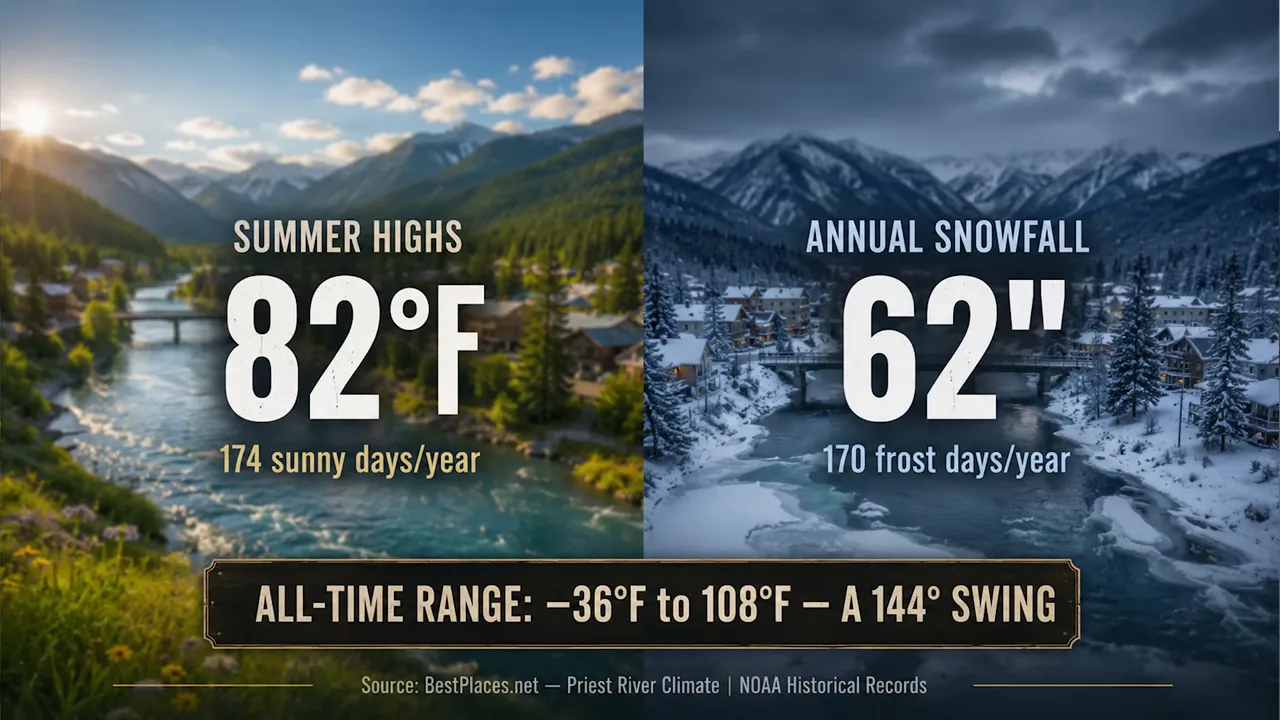
Priest River averages about 62 inches of snow annually, more than double the national average of 28 inches. It also gets around 170 frost days per year, and December averages nearly 23 inches of snow by itself.
The all-time high is 108 degrees and the all-time low is negative 36 degrees. That is a 144-degree swing. Priest River does not really believe in moderation.
Summer, however, is fantastic. Daytime highs are generally in the low 80s, nights cool down, and the area gets about 174 sunny days per year. June through August can be some of the best weather anywhere.
The issue is not whether the summer is good. It is whether you are built for the long winter. Priest River is in the Pacific time zone, so winter darkness arrives early. If 4:30 p.m. darkness and frequent snow sound like a personal attack, take that seriously before moving to Idaho.
Healthcare Schools And Other Trade Offs
Living in Priest River, Idaho requires a very honest conversation about healthcare. The nearest hospital is Bonner General in Sandpoint, about 23 miles away. It is a 25-bed critical access hospital that handles basic needs well.
For specialists such as dermatology, oncology, or cardiology, expect to drive to Coeur d’Alene or Spokane. On a good day, that is usually a 60 to 90-minute trip. In a January emergency with significant snow on the ground, those 23 miles to Sandpoint can feel much farther.
For families with school-age children, the West Bonner County School District is another factor to evaluate. The district is rated C-minus, with reading proficiency around 60% and math proficiency around 41%. Many families in the area homeschool, which fits the independent culture, but that choice requires its own level of preparation.
Other Realities To Consider
- Shopping and dining: Major options require trips to Sandpoint or Spokane.
- Internet: Rural service can be unreliable, especially outside town.
- Petty theft and drug use: These exist here, just as they do in small towns across America.
- Wildfire risk: About 99% of properties carry some wildfire risk over the next 30 years, which can affect insurance options and costs.
None of this means Priest River is a bad choice. It means the right choice is an informed one. A beautiful view does not remove the need for insurance, snow tires, emergency planning, and a realistic idea of what services are available.
Who Living In Priest River Idaho Is For
Priest River is not for everyone. Honestly, that is exactly why it works for the people who love it.
Living in Priest River, Idaho makes the most sense for someone who values:
- Solitude over convenience
- Self-reliance over services
- Community over crowds
- Forest acreage over a half-acre HOA lot
- Quiet and privacy over constant entertainment
There are people who will look at the snow, limited restaurants, hospital distance, and small job market and say absolutely not. Fair enough. This is not Boise. It is not Coeur d’Alene. It is not a place for someone who needs convenience on demand.
But for the right person, Priest River may be one of the most honest, beautiful, and comparatively affordable places in North Idaho. It does not need to sell itself to everybody. If you need 40 acres of forest, a river nearby, room for animals, and a community that still embraces its own, you may already know why it works.
Frequently Asked Questions About Priest River Idaho
Is Priest River Idaho A Good Place To Live?
Priest River can be an excellent place to live for people who value privacy, rural property freedom, community, forests, and access to water. It is less suitable for people who need abundant shopping, specialist healthcare nearby, reliable rural internet without verification, or a large local job market.
How Much Does It Cost To Buy A Home In Priest River Idaho?
The median home price is around $415,000. Listings range from bare land around $200,000 to higher-end acreage homes, including properties above $1 million.
Does Priest River Get A Lot Of Snow?
Yes. Priest River averages about 62 inches of snow per year, compared with a national average of 28 inches. Winter preparation, reliable vehicles, snow removal planning, and comfort with early darkness are all part of life here.
Can Remote Workers Live In Priest River?
Yes, and remote work can be one of the best ways to make living in Priest River, Idaho work financially. However, internet service varies by property. Confirm connectivity at the exact address before buying, and check whether Starlink will have a clear view of the sky through the trees.
Are There HOAs And CCNRs In Priest River?
Many acreage properties outside town have no CC&Rs, no HOA, and no architectural review board. Restrictions can vary by parcel, so buyers should still review the specific property documents and zoning before making decisions.
How Far Is Priest River From Healthcare?
Bonner General Hospital in Sandpoint is about 23 miles away. Specialist care often requires travel to Coeur d’Alene or Spokane, typically 60 to 90 minutes in good conditions.
If you are moving to Idaho in search of a polished, convenient, always-open lifestyle, Priest River may frustrate you fast. If you are looking for a place where the water, trees, open land, independence, and community matter more than convenience, it could be exactly what you have been trying to find.
Living in Priest River, Idaho is not about disappearing from life. It is about choosing a different version of it. Just make sure you can handle the snow, the distance, the infrastructure, and the fact that your nearest neighbor might genuinely be a moose.